

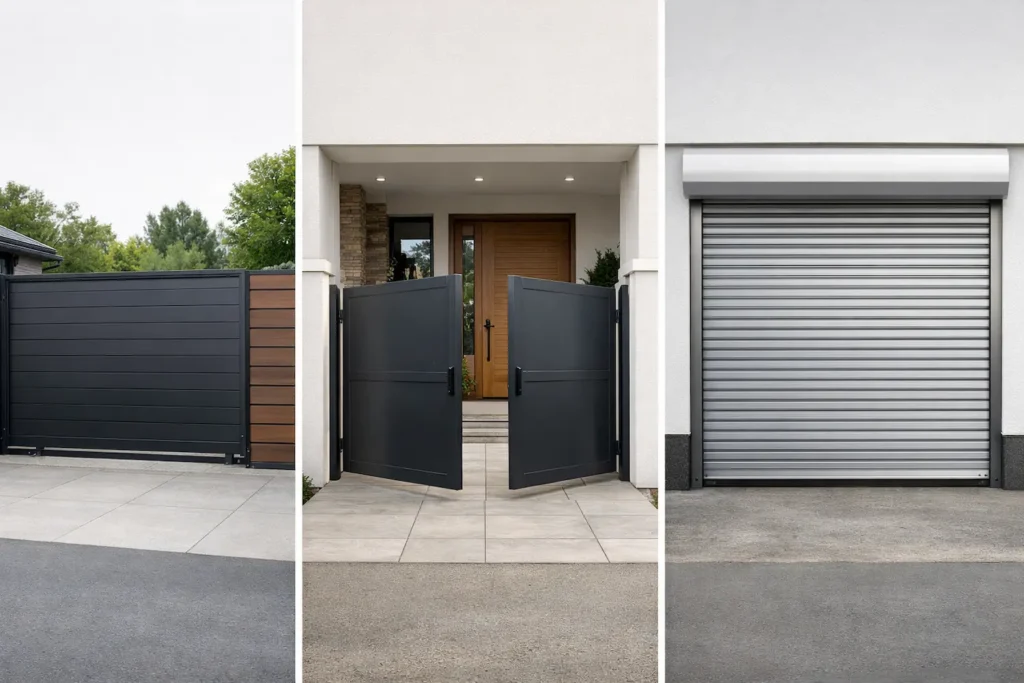
Security gates play a critical role in protecting residential and commercial properties by controlling access, deterring unauthorized entry, and reinforcing perimeter security. As security needs evolve, property owners are no longer choosing gates based solely on appearance or cost, but on functionality, automation options, and long-term performance.
Understanding the different types of security gates available today helps decision-makers select solutions that align with space constraints, usage patterns, and security requirements. From private homes to industrial facilities, each property demands a gate system designed to balance protection, convenience, and durability.
This guide explores the main categories of security gates, beginning with a clear overview of how they are classified and what factors influence their design and operation.
Understanding the main types of security gates
Security gates are classified based on how they operate, the space they require, and the level of control they provide. While many designs exist, most modern gate systems fall into a few core operational categories that define their suitability for specific environments.
Rather than focusing only on aesthetics, understanding gate types from a functional perspective allows property owners to make informed decisions that impact daily access, safety, and maintenance over time.
Why choosing the right type of security gate matters
Selecting the correct type of security gate directly affects how efficiently a property functions and how secure it remains. An unsuitable gate type can create traffic bottlenecks, increase wear and tear, or fail to provide adequate protection.
The right choice helps ensure:
- Smooth and controlled access for vehicles and pedestrians
- Compatibility with automation and access control systems
- Reduced long-term operational and maintenance costs
In both residential and commercial settings, matching the gate type to the property’s layout and usage frequency is essential for achieving reliable security without compromising convenience.
Key factors that define different types of security gates
Several technical and environmental factors determine how security gates are designed and classified. These factors influence performance, durability, and overall suitability for a specific property.
Key defining factors include:
- Opening mechanism – sliding, swinging, rolling, or vertical movement
- Available space – lateral clearance, depth, and overhead requirements
- Usage frequency – low-traffic residential use vs high-traffic commercial use
- Security level – deterrence, controlled access, or high-security protection
To better understand these differences, the table below summarizes how these factors shape gate selection:
| Factor | Impact on gate type |
|---|---|
| Space availability | Determines whether sliding, swing, or rolling systems are feasible |
| Traffic volume | Influences motor strength and structural durability |
| Automation needs | Affects compatibility with sensors and access controls |
| Security requirements | Defines material strength and locking mechanisms |
Evaluating these factors together provides a clearer framework for comparing security gate options and identifying the most appropriate solution for each property type.
You might be interested in: Rituales ancestrales del Perú y su conexión con las tradiciones espirituales
Sliding security gates: features, benefits, and best uses
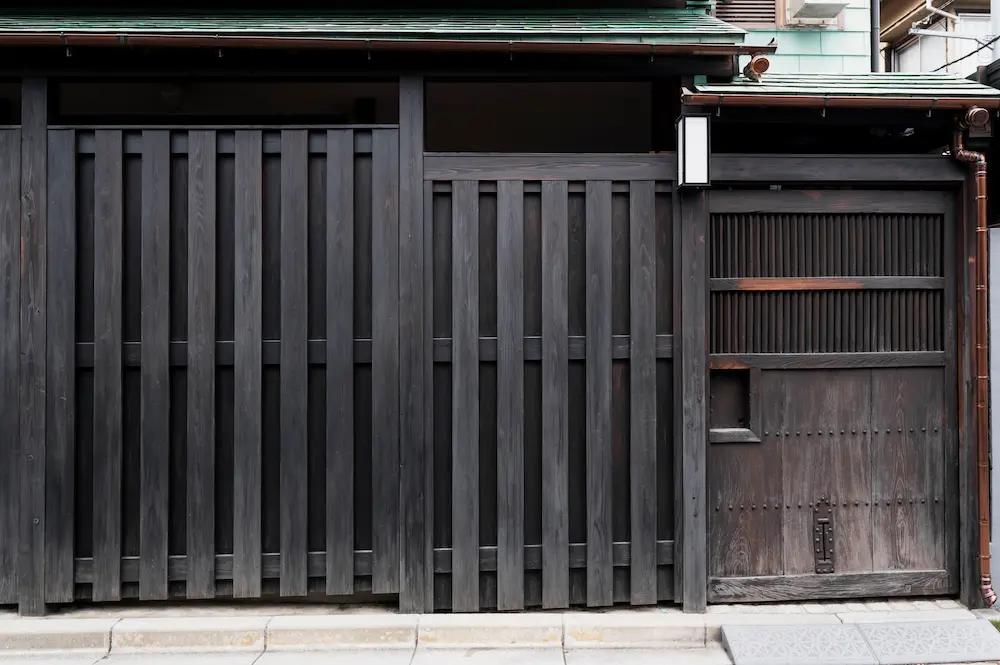
Sliding systems are among the most widely used types of security gates in both residential and commercial environments. Their horizontal movement makes them especially suitable for properties where space optimization and controlled access are priorities.
Unlike swing-based designs, sliding security gates operate along a track or cantilever system, allowing them to open without intruding into driveways or pedestrian areas. This operational advantage explains their popularity in modern security planning.
How sliding security gates work
Sliding security gates move laterally along a fixed path, either supported by a ground track or suspended through a cantilever mechanism. This design allows for smooth operation even in locations with limited clearance.
From a functional standpoint, sliding gates:
- Open parallel to the fence or wall
- Require lateral space rather than frontal clearance
- Integrate easily with automated motors and access control systems
Because of this mechanism, sliding gates are often preferred for properties with sloped driveways or restricted entrance depth, where swing motion would be impractical.
Ideal applications for sliding security gates
Sliding security gates adapt well to environments where access control must remain efficient and predictable. Their stability and controlled movement make them suitable for both low and high-traffic scenarios.
They are commonly used in:
- Residential homes with limited driveway depth
- Apartment complexes and gated communities
- Commercial facilities with frequent vehicle entry
- Industrial sites requiring perimeter control
In commercial and industrial settings, sliding gates provide a balance between operational efficiency and physical security, especially when integrated with surveillance or credential-based access systems.
Pros and limitations of sliding security gates
Sliding security gates stand out for their efficient use of space and reliable performance in controlled-access environments. However, their effectiveness depends on proper planning, available clearance, and maintenance conditions. The following table provides a clearer, more detailed comparison to support informed decision-making.
| Evaluation factor | Advantages | Limitations |
|---|---|---|
| Space management | Open parallel to the perimeter, preserving driveway and pedestrian space | Require adequate lateral clearance along the fence or wall |
| Operational efficiency | Smooth and predictable movement, suitable for frequent daily use | Performance may be affected if tracks are obstructed or misaligned |
| Automation and control | Highly compatible with automated motors, sensors, and access systems | Automated components increase initial installation complexity |
| Traffic capacity | Handle medium to high vehicle flow without interfering with entry lanes | Not ideal for properties with irregular or fragmented side space |
| Maintenance requirements | Cantilever systems reduce ground contact and debris accumulation | Track-based systems require periodic cleaning and inspection |
| Installation conditions | Offer strong structural stability once properly installed | Uneven terrain or slopes may raise installation costs |
This expanded comparison helps property owners and security planners evaluate sliding security gates beyond basic features, considering both operational benefits and real-world constraints before making a final decision.
You might be interested in: ¿Qué son los arcanos? El mapa espiritual del tarot en 2026
Swing security gates: a classic and versatile option
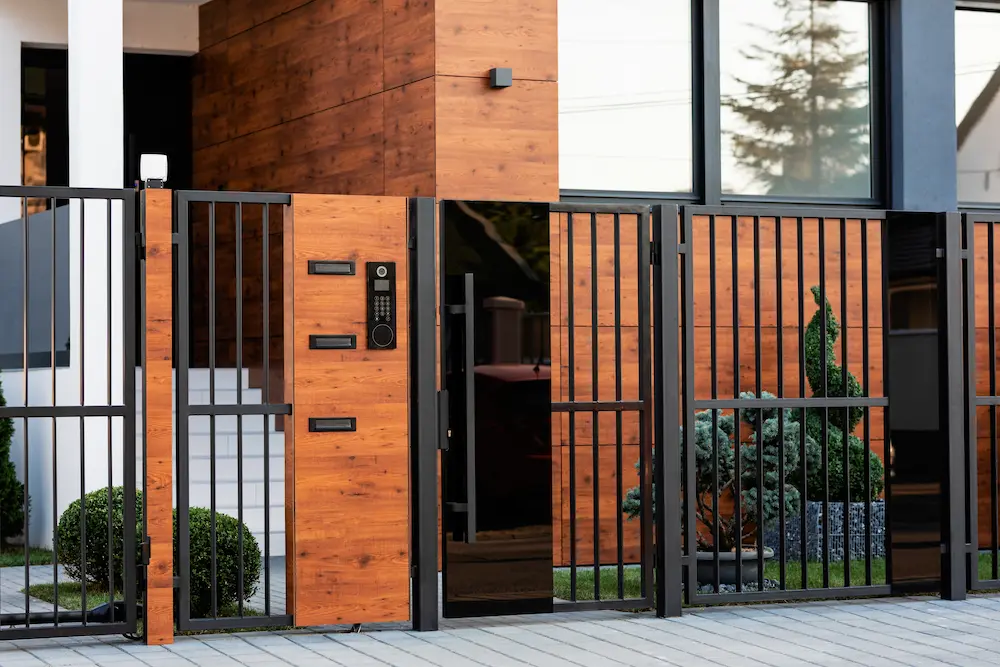
Swing systems are one of the most traditional types of security gates, widely used in residential properties and low to medium-traffic commercial environments. Their simple opening mechanism and flexible design options make them a practical solution when space conditions allow frontal movement.
Unlike sliding systems, swing security gates open inward or outward on hinges, which means their performance depends largely on available clearance and traffic patterns. When properly installed, they provide reliable access control with a strong visual deterrent.
Single swing vs double swing security gates
Swing security gates are available in single-leaf and double-leaf configurations, each suited to different entrance sizes and usage conditions.
- Single swing gates are ideal for narrow driveways and pedestrian access points with low vehicle frequency.
- Double swing gates are better suited for wider entrances, distributing weight evenly and improving stability in larger openings.
Choosing between single and double swing designs depends primarily on entrance width, gate weight, and frequency of use.
When swing security gates are the best choice
Swing security gates perform best in properties with sufficient space for full opening without obstructing vehicles or walkways. Their simple mechanics reduce operational complexity, making them a dependable option for locations where access patterns are predictable and well managed.
They are commonly recommended for residential homes, private communities, and commercial sites with moderate traffic and flat terrain, where ease of operation, visual appeal, and consistent performance are valued over high-volume or rapid-access requirements.
Advantages and disadvantages of swing security gates
Swing security gates offer design flexibility and straightforward installation, but their performance is closely tied to space availability and environmental conditions.
| Evaluation factor | Advantages | Disadvantages |
|---|---|---|
| Design flexibility | Adapt well to different architectural styles | Large panels may be affected by strong winds |
| Installation | Simpler setup compared to sliding systems | Precise hinge alignment is required |
| Space requirements | Effective when frontal clearance is available | Not suitable for short or sloped driveways |
| Automation | Compatible with standard swing gate motors | Less efficient for very heavy gate panels |
| Maintenance | Easy access to hinges and motors | Wear increases with frequent use |
This streamlined comparison helps determine whether swing security gates align with both spatial and operational needs.
You might be interested in: Vida nocturna en Miraflores: Elige el mejor lugar para disfrutar un cóctel
Rolling security gates for compact and high-traffic spaces
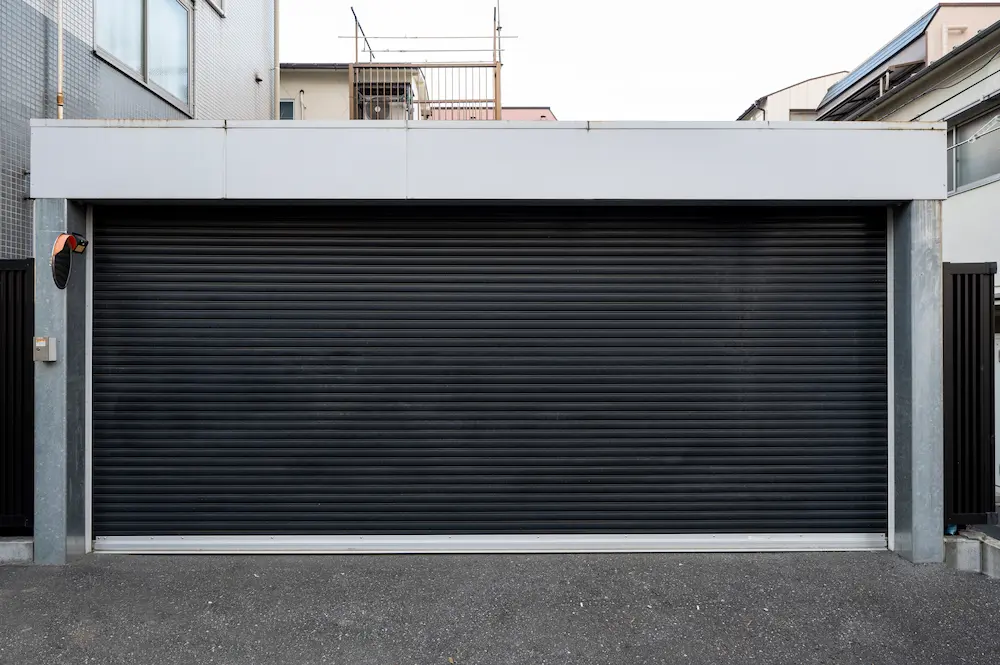
Rolling systems are a specialized category within the broader types of security gates, designed to maximize space efficiency while supporting frequent use in demanding environments. Their vertical rolling mechanism allows them to secure entrances without requiring lateral or frontal clearance, making them an effective solution for compact or architecturally constrained spaces.
These systems are commonly used in commercial and industrial environments, where durability, fast operation, and consistent access control are essential. In urban areas, businesses often rely on professional roller door service in New York to ensure rolling security gates remain operational and compliant with safety standards.
What makes rolling security gates different
Rolling security gates operate by lifting vertically and rolling into a compact housing above the opening. This design allows them to secure entrances without occupying driveway or sidewalk space.
Their defining characteristics include compact storage, vertical movement, and strong structural components, making them a practical choice for properties with tight spatial constraints or architectural limitations.
Common commercial uses of rolling security gates
Rolling security gates are widely used in warehouses, parking garages, and retail storefronts, particularly in dense urban areas. Commercial districts with high daily traffic, such as those using Roll up gates Queens, benefit from these systems due to their space-saving design and reliable performance.
They are commonly installed in:
- Warehouses and loading docks
- Parking garages and commercial buildings
- Retail storefronts and service entrances
Their ability to operate efficiently in high-traffic conditions makes them particularly suitable for commercial applications where reliability and speed are critical.
Security and maintenance considerations for rolling security gates
Rolling security gates, including Overhead roll up doors, provide a high level of protection thanks to their reinforced materials and vertical locking systems. Regular maintenance of motors, springs, and tracks is essential to ensure long-term reliability in high-use environments.
However, regular maintenance of motors, springs, and rolling mechanisms is essential to ensure smooth operation, especially in high-use environments. Proper upkeep helps maintain security performance and prevents operational downtime.
Other common types of security gates used today
Beyond sliding, swing, and rolling systems, there are additional types of security gates designed to address specific spatial, operational, or security challenges that standard solutions cannot resolve. These alternatives are often selected for properties with unconventional layouts, limited clearance, or specialized access demands that require more adaptable gate mechanisms.
Understanding these types of security gates expands the range of available solutions and helps property owners, facility managers, and security planners identify options that align more precisely with architectural conditions, traffic patterns, and long-term security objectives.
Vertical lift security gates
Vertical lift systems are a distinct category within the broader types of security gates, operating by moving upward as a single panel rather than rolling or sliding. This mechanism makes them suitable for locations where both lateral and frontal space are limited, but overhead clearance is available.
Among all types of security gates, vertical lift designs are commonly used in industrial facilities, transportation hubs, and high-security environments where controlled, compact movement is essential. Their rigid structure also provides a strong physical barrier, reinforcing perimeter protection in sensitive areas.
Bi-fold and telescopic security gates
Bi-fold and telescopic systems represent flexible types of security gates that combine elements of sliding and folding movement. Instead of opening as a single panel, these gates fold or telescope into sections, reducing the space required for operation.
These types of security gates are often installed in commercial properties, residential complexes, or urban environments where entrances are wide but surrounding space is restricted. Their segmented design allows for faster opening times while maintaining controlled access and visual deterrence.

How to choose the right type of security gate for your property
Choosing among the different types of security gates requires more than simply comparing designs or prices. The right decision depends on how the gate will function within the property’s daily operations, security goals, and physical constraints, as well as how it will perform over time under regular use.
By evaluating key practical factors such as space availability, traffic frequency, and access control needs, property owners can narrow down which types of security gates offer the best balance between protection, efficiency, and long-term reliability.
Space, usage frequency, and security level
Space availability is one of the most decisive elements when selecting from various types of gates. Properties with limited lateral or frontal clearance may require compact or vertical solutions, while larger entrances allow for more flexible configurations.
Usage frequency also plays a critical role. Residential properties with occasional access needs typically benefit from simpler types of security gates, whereas commercial or industrial sites require systems designed for repeated daily operation. At the same time, the required security level—whether deterrence, controlled access, or reinforced protection—directly influences material strength and gate mechanism.
Manual vs automatic security gates
Another key consideration when comparing types of gates is whether the system will operate manually or automatically. Manual gates may suit low-traffic properties, but automated solutions provide greater convenience, consistency, and access control.
Automatic systems enhance most types of security gates by integrating motors, sensors, and remote access technologies. For properties where efficiency and controlled entry are priorities, automation often becomes a defining factor in selecting the most appropriate gate type.
Final thoughts on types of security gates
Selecting the right security gate is ultimately about matching functionality with real-world conditions. Each gate system offers distinct advantages depending on space, usage patterns, and security requirements, making it essential to evaluate how the gate will perform over time rather than focusing solely on initial appearance or cost.
Whether for residential or commercial properties, a well-chosen security gate enhances access control, supports daily operations, and contributes to long-term property value. By understanding the available options and their practical implications, property owners can make informed decisions that deliver reliable protection and efficient access for years to come.